
Natural Septorhinoplasty Before & After in Beverly Hills
Nasal Bridge and Tip Refinement With Preservation of Natural Facial Harmony | Elie Ramly, MD
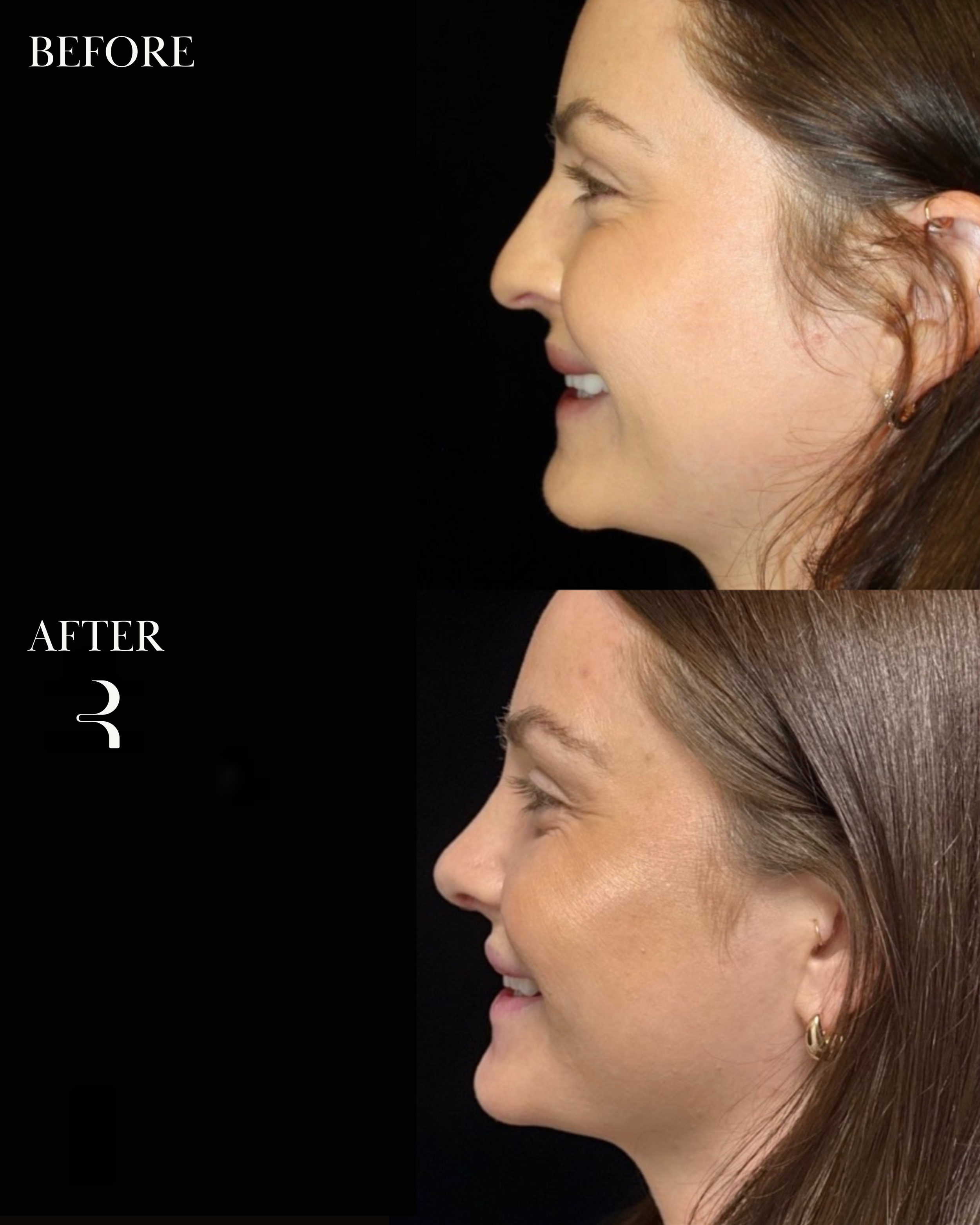
Before and after septorhinoplasty performed by Beverly Hills plastic surgeon Dr. Elie Ramly, with the goal of refining nasal proportions while preserving her natural facial features.
Natural Rhinoplasty: Refining the Nose Without Changing Who You Are
This patient underwent septorhinoplasty performed by Beverly Hills plastic surgeon Dr. Elie Ramly, with the goal of refining nasal proportions while preserving her natural facial features.
The before-and-after profile photographs demonstrate changes to the nasal bridge and tip, creating a softer nasal silhouette that complements the patient's facial anatomy.
An important aspect of this case is that the patient is smiling in both photographs. This provides an opportunity to appreciate how the nose relates to the surrounding facial features during natural expression, rather than evaluating nasal shape only in a neutral position.
The goal of a thoughtfully planned rhinoplasty is not necessarily to create a smaller or dramatically different nose. It is to understand which changes will improve facial balance while preserving the features that give each patient their unique charm.
Case Overview
Procedure: Septorhinoplasty
Surgical Focus: Nasal bridge refinement, nasal tip contour, and overall profile balance
Surgeon: Elie Ramly, MD
Location: Beverly Hills, California
Aesthetic Goal: A natural-looking nasal profile that complements the patient's facial features and expression
Before and After: What Changed?
1. Nasal Bridge and Dorsal Profile Refinement
The preoperative side-profile photograph shows a more prominent dorsal contour.
Following septorhinoplasty, the nasal bridge appears smoother, creating a softer transition from the upper nose toward the nasal tip.
The objective was to refine the profile without creating an excessively scooped or artificial appearance.
2. Nasal Tip Refinement and Projection
The postoperative photograph demonstrates changes in nasal tip contour and its relationship to the bridge.
Rather than considering the nasal tip in isolation, Dr. Ramly evaluates tip projection, rotation, support, and their relationship to the patient's other facial features.
These details contribute to the overall balance of the nasal profile.
3. Natural Appearance While Smiling
One of the distinguishing features of these photographs is that the patient is smiling in both the preoperative and postoperative views.
The appearance of the nose can change during facial expression because of the interaction between nasal support structures and surrounding muscles.
A thoughtful septorhinoplasty plan considers not only how the nose appears at rest but also how it relates to the face during expression.
The postoperative image demonstrates a refined profile that remains harmonious with the patient's natural smile.
What Is Septorhinoplasty?
Septorhinoplasty combines surgical treatment of the nasal septum with rhinoplasty techniques that modify the external nasal framework.
Depending on the patient's anatomy and goals, septorhinoplasty may address:
Nasal bridge shape and contour
Nasal tip projection, rotation, and definition
Septal deviation or structural asymmetry
Nasal support and stability
Functional nasal airway concerns
Overall nasal proportions and facial balance
Not every septorhinoplasty involves the same combination of maneuvers. The specific surgical plan is based on the patient's anatomy, aesthetic priorities, and functional needs.
Why Natural-Looking Rhinoplasty Requires Structural Precision
The nose is both an aesthetic structure and an important component of the airway.
Changes to the nasal bridge or tip can influence structural support, airflow, and the relationships between different parts of the nose.
For this reason, rhinoplasty should not be approached simply as removing cartilage or reducing nasal size.
Dr. Ramly emphasizes careful structural planning to achieve the intended aesthetic changes while maintaining appropriate support and accounting for nasal function.
The objective is a result that looks natural in the context of the entire face rather than one that follows a predetermined template.
The Ramly Method: Preserving Your Unique Facial Identity
Dr. Ramly approaches rhinoplasty by first understanding what each patient hopes to change and, equally importantly, what they wish to preserve.
Every face has distinctive proportions, expressions, and characteristics that contribute to its identity.
His philosophy emphasizes:
Individualized aesthetic planning: Refining the nose according to the patient's unique facial anatomy rather than applying a standardized shape.
Structural preservation: Maintaining appropriate support while making planned aesthetic changes.
Natural facial harmony: Considering the relationship between the nose, lips, chin, cheeks, and overall facial profile.
Functional awareness: Evaluating nasal breathing and structural stability alongside cosmetic concerns.
Long-term perspective: Planning changes with consideration for healing, tissue characteristics, and ongoing facial changes.
The guiding principle is simple: a successful rhinoplasty should feel like it belongs naturally on your face.
Frequently Asked Questions
What is the difference between rhinoplasty and septorhinoplasty?
Rhinoplasty changes the external shape or structure of the nose. Septorhinoplasty also involves surgery on the nasal septum, often to address structural deviation, airway concerns, or support requirements.
Can septorhinoplasty improve both breathing and appearance?
Yes. When indicated, septorhinoplasty can address both aesthetic concerns and structural problems affecting nasal breathing. However, the specific goals and outcomes depend on the patient's anatomy and surgical plan.
Can rhinoplasty make a nose look more natural?
Rhinoplasty can refine nasal proportions while preserving the features that contribute to a person's facial identity. The objective is individualized facial balance rather than a universally ideal nasal shape.
Can rhinoplasty improve a nasal tip that droops when smiling?
Yes. In selected patients, surgical modification of nasal tip support and related structures can reduce unwanted tip movement during smiling. The precise approach depends on the underlying anatomy.
Will septorhinoplasty change how my smile looks?
Rhinoplasty may influence the relationship between the nose and upper lip, particularly when tip support or muscles affecting nasal movement are modified. The surgical plan should consider facial expression, although changes in smile appearance can occur.
How long does septorhinoplasty take to heal?
Initial swelling generally improves over several weeks, but nasal refinement continues over many months. Final results may take 12–18 months or longer, particularly around the nasal tip.
Are septorhinoplasty results permanent?
Structural changes from septorhinoplasty are intended to be long-lasting. However, healing, scar formation, tissue changes, and natural aging can influence the appearance of the nose over time.
Septorhinoplasty Consultation in Beverly Hills
Patients considering septorhinoplasty benefit from an individualized evaluation of nasal anatomy, breathing, facial proportions, and aesthetic goals.
Dr. Elie Ramly offers rhinoplasty and septorhinoplasty consultations in Beverly Hills, with an emphasis on structural precision, natural-looking results, and preservation of each patient's unique facial identity.
Elie Ramly, MD
Plastic Surgeon
Ramly Plastic Surgery
Beverly Hills, California