
Revision Deep Plane Facelift & Revision Deep Neck Lift in Beverly Hills
Complex Revision Deep Plane Facial Rejuvenation Following a Previous SMAS Facelift | Elie Ramly, MD
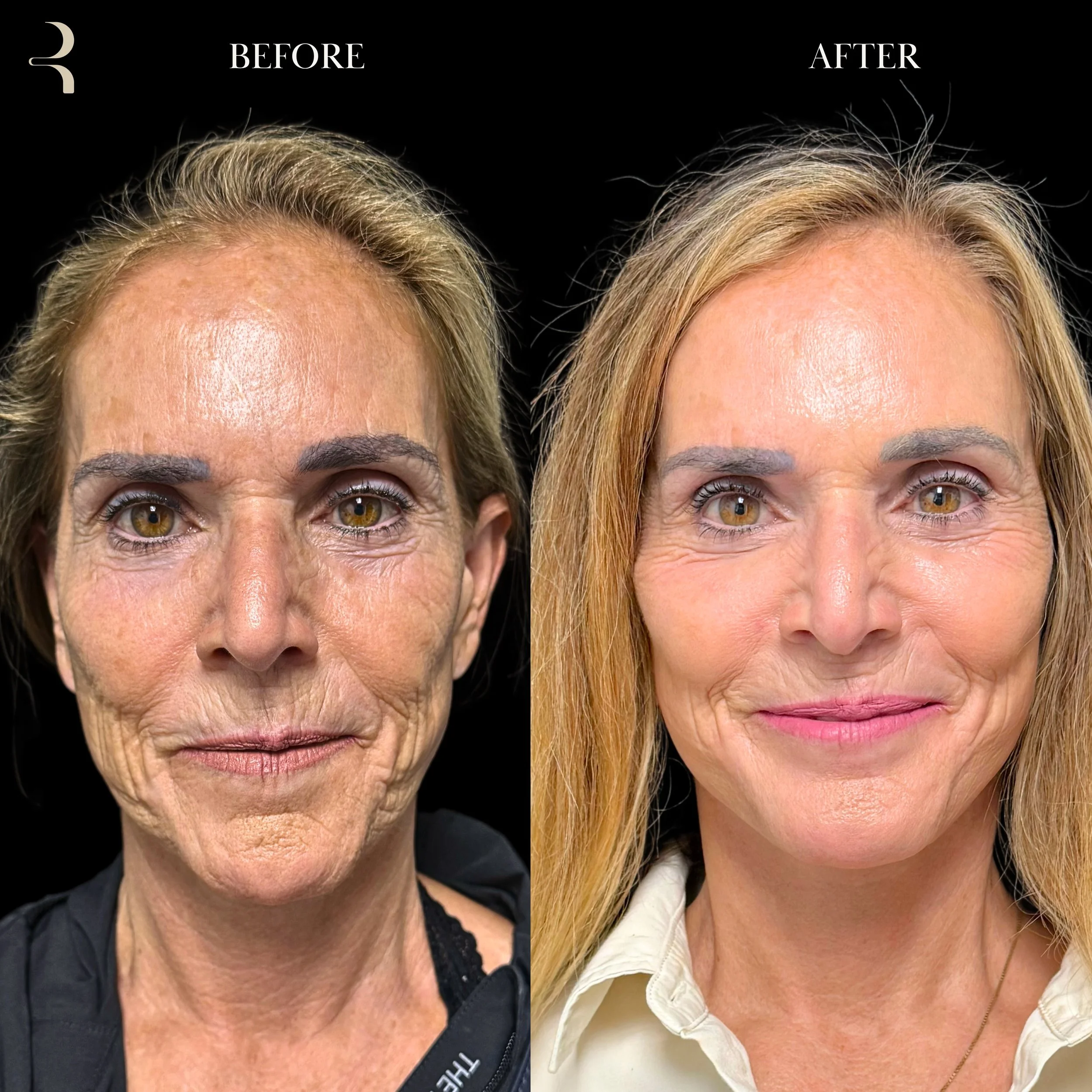
Frontal before-and-after comparison following revision deep plane facelift, revision deep neck lift, and facial fat grafting.
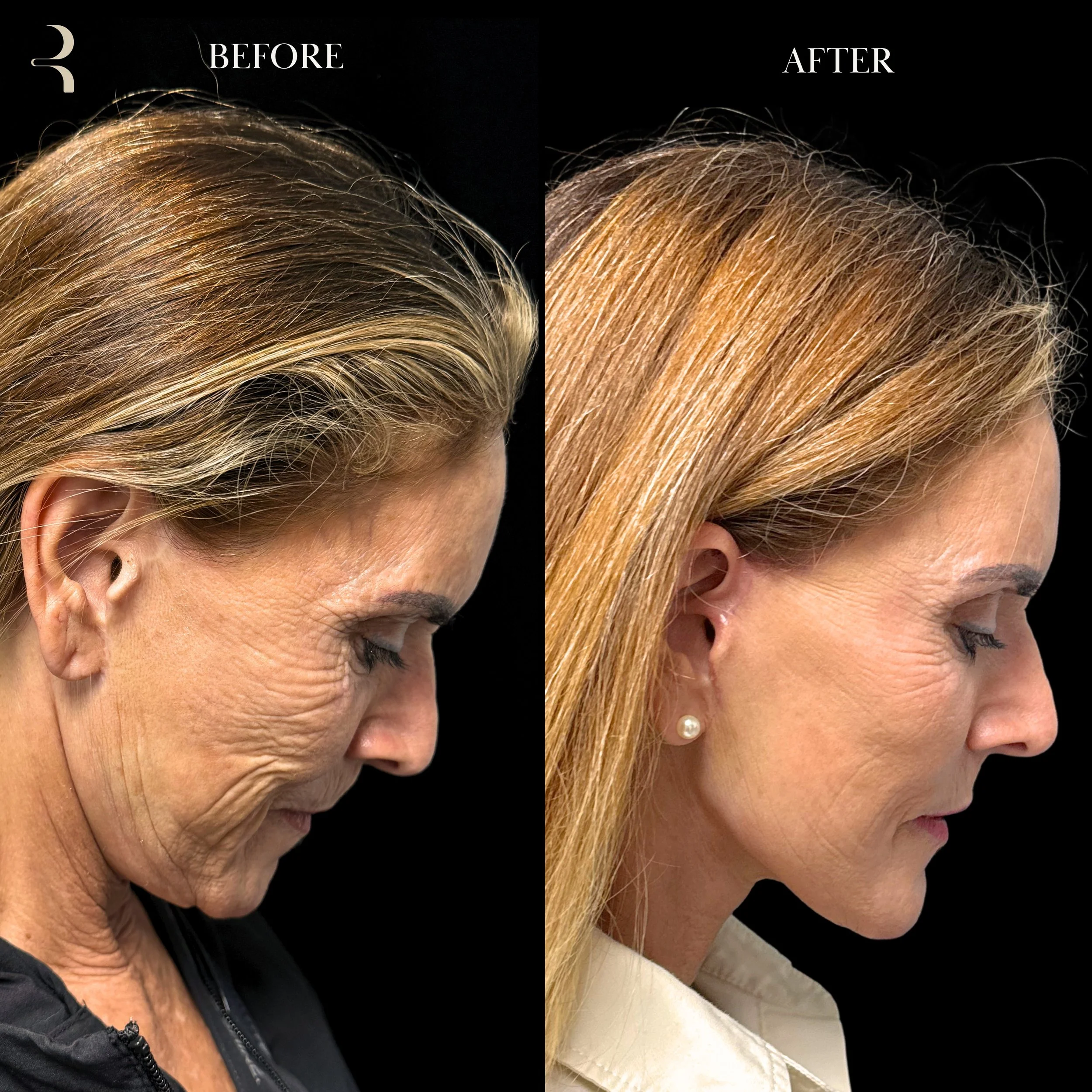
Side-profile before-and-after comparison, with the head angled downward, demonstrating improved lower-face contour, jawline definition, and neck appearance following revision deep plane facelift and revision deep neck lift.
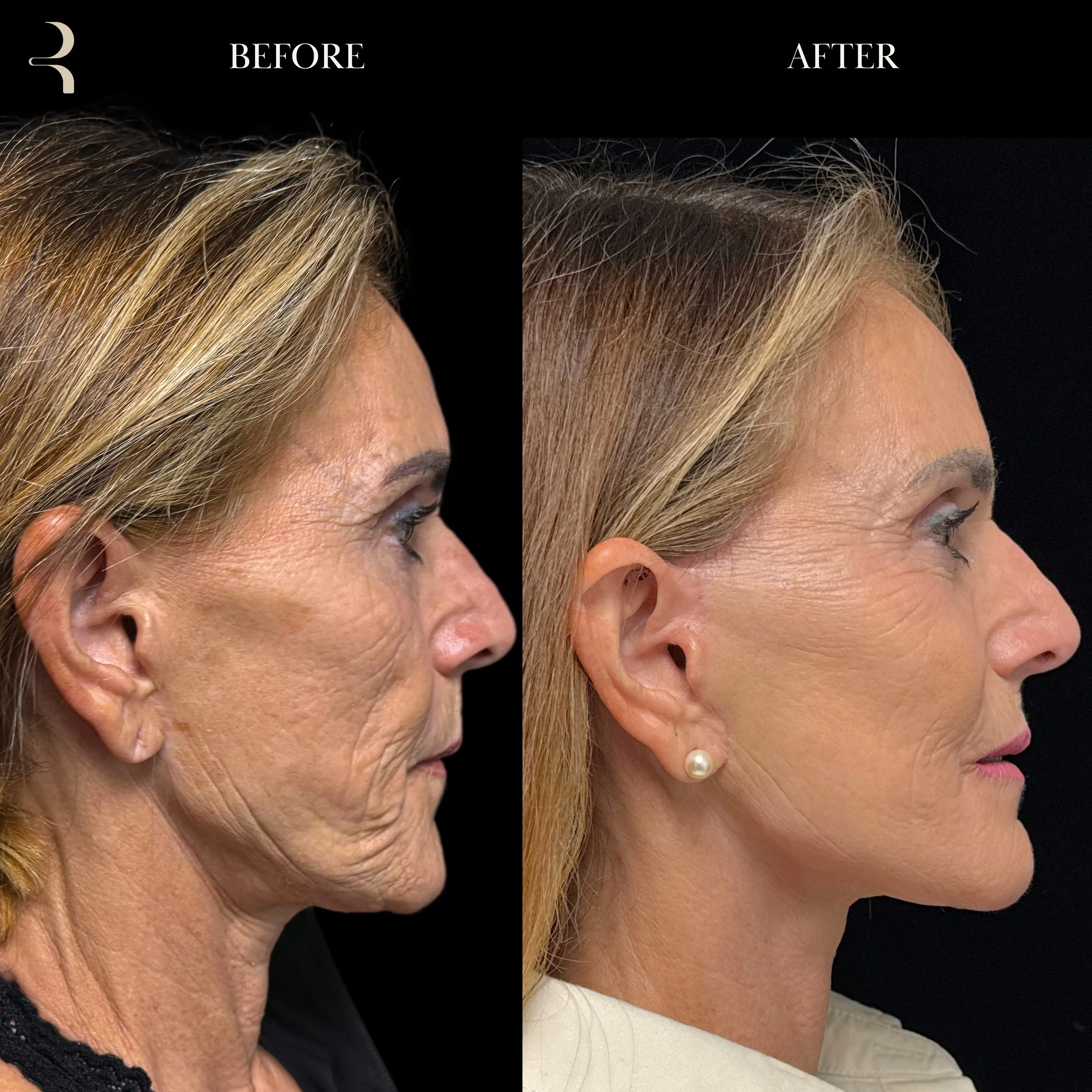
Profile view demonstrating improvement in neck contour and jawline definition following revision facelift and deep neck lift.
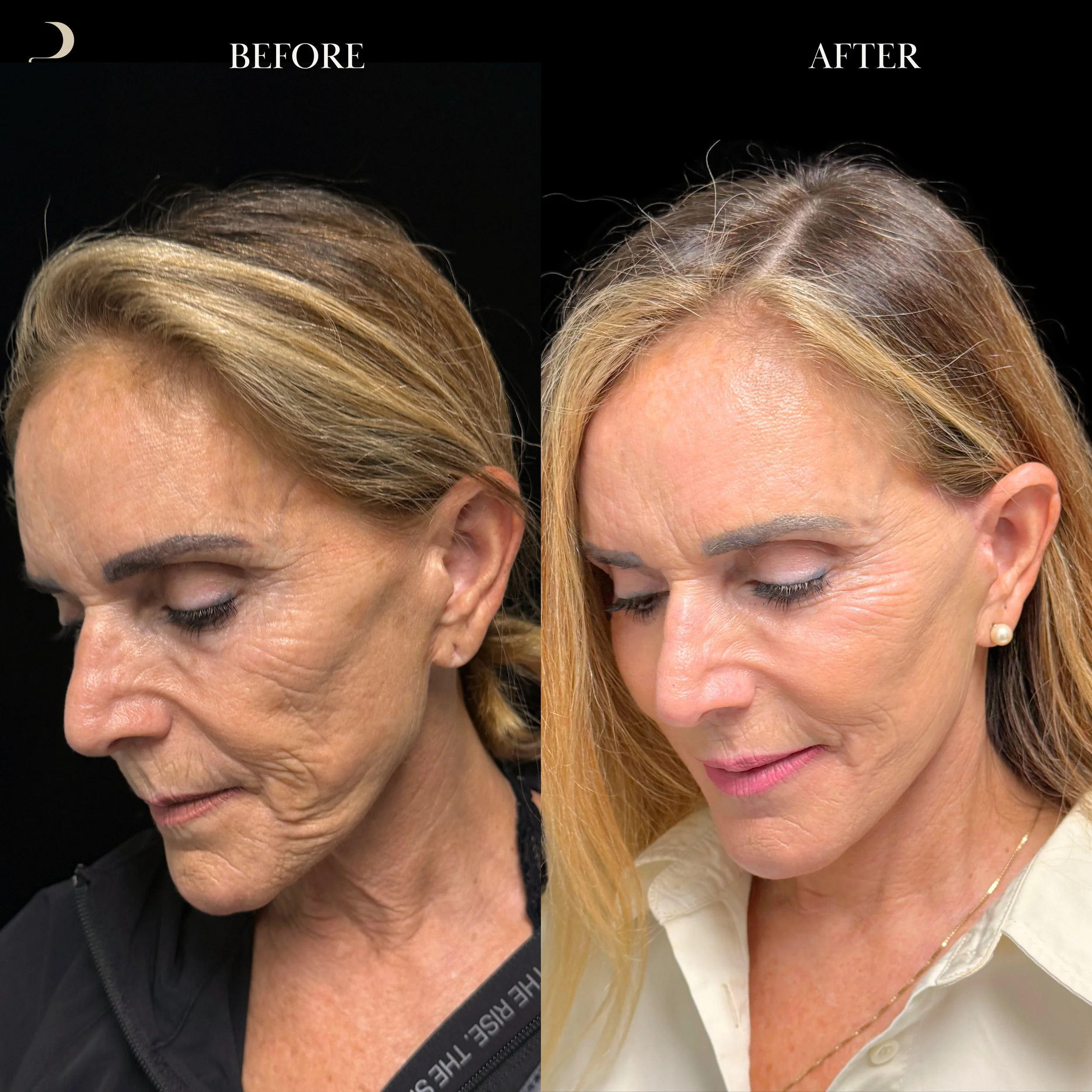
Oblique view illustrating facial contour, midface, jawline, and neck rejuvenation following revision deep plane facelift, neck lift, and facial fat grafting.
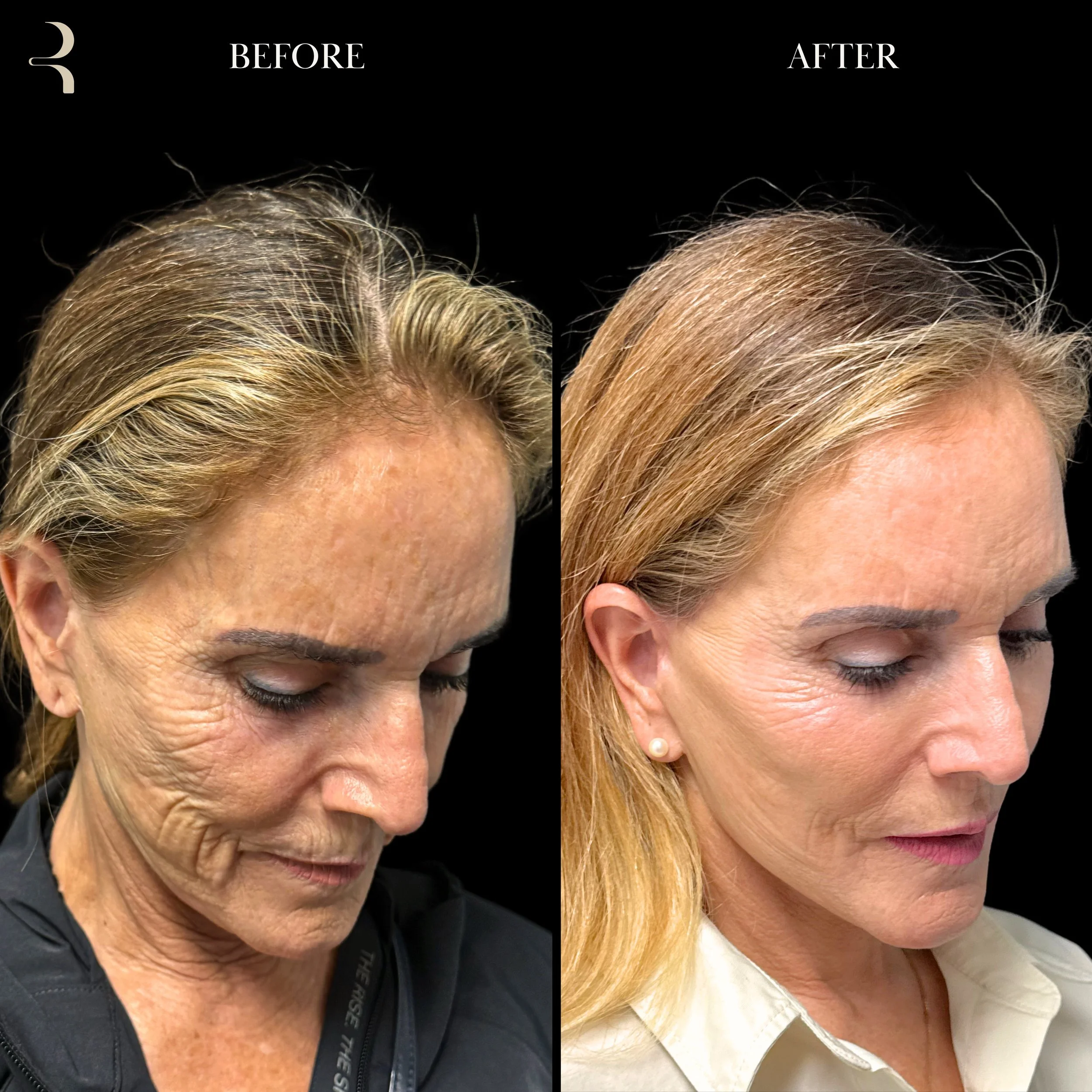
Oblique before-and-after comparison highlighting overall face and neck rejuvenation using revision deep plane face and neck lift surgery and fat grafting while preserving the patient's natural appearance.
Before and After Revision Deep Plane Facelift
This patient came to Dr. Elie Ramly at Ramly Plastic Surgery in Beverly Hills seeking revision facial rejuvenation approximately 10 years after undergoing a previous SMAS facelift. Her goals were deeply personal: to address the complications and changes that had developed following her original surgery, restore natural facial contours, and ultimately look and feel like herself again.
Her previous facelift had been complicated by an area of initial skin necrosis, resulting in scarring beneath the jawline in the upper neck. She also experienced visible incisional scars and distortion of the lower face and jawline. As the natural aging process continued, she developed recurrent neck laxity, loss of cheek volume, and progressive changes in skin tone, elasticity, and texture.
Revision facelift surgery in a previously operated face presents a different set of challenges from primary facelift surgery. Previous incisions, scar tissue, altered tissue planes, and changes in the underlying anatomy require careful evaluation and an individualized surgical strategy.
Dr. Ramly developed a comprehensive revision surgical plan combining a revision deep plane facelift, revision deep neck lift, facial fat grafting, and TCA chemical peel.
Each procedure addressed a different component of her concerns: releasing scarred and tethered areas, restoring facial structural support, refining the jawline and neck, replenishing lost volume, and improving skin texture and tone.
The overarching objective was not to create a different face, but to restore natural facial harmony while preserving the patient's distinctive features, expressions, and identity.
Case at a Glance
Treating surgeon: Elie Ramly, MD
Practice: Ramly Plastic Surgery, Beverly Hills, California
Previous surgery: SMAS facelift approximately 10 years earlier
Revision procedures: Revision deep plane facelift and revision deep neck lift
Additional treatments: Facial fat grafting and TCA chemical peel
Previous complications: Skin necrosis with subsequent submental scarring, visible incisional scars, and lower facial distortion
Primary concerns: Recurrent facial and neck laxity, cheek volume loss, scarring, skin texture changes, and loss of natural facial contour
Treatment objective: Comprehensive revision facial rejuvenation with preservation of natural facial identity
The Patient's History: When a Previous Facelift Requires Revision
Revision facelift surgery often involves more than addressing the ordinary effects of aging.
Patients who have undergone previous facelift procedures may present with a combination of recurrent tissue laxity, residual deformities, scar formation, altered tissue mobility, and changes in facial contour.
In this patient's case, her original SMAS facelift had been complicated by an area of skin necrosis. This resulted in scarring beneath the jawline in the upper neck, alongside visible incisional scars and distortion of the lower face.
Approximately 10 years later, she was also experiencing the additional effects of facial aging, including:
Recurrent laxity of the neck and lower face.
Loss of natural cheek and midface volume.
Distortion of the jawline and lower facial contour.
Submental scarring and tethering from the previous surgical complication.
Visible facelift incisional scars.
Reduced skin elasticity and tone.
Deep facial wrinkles and diffuse skin dyschromias.
Her concerns were therefore not attributable to a single issue. They reflected the combined effects of previous surgery, scar formation, and subsequent aging.
This distinction is important when planning revision facelift surgery. A successful revision requires understanding both the original surgical changes and the new anatomical and aesthetic concerns that have developed over time.
Why Revision Facelift Surgery Is Different From Primary Facelift Surgery
A primary facelift is performed in anatomy that has not previously undergone facelift dissection. Revision facelift surgery, by contrast, requires operating in tissues that may have been altered by previous incisions, dissection, healing, and scar formation.
Scar tissue can affect tissue mobility, normal anatomical planes, vascular considerations, and the relationship between the skin and deeper facial structures.
In patients with a history of skin necrosis or significant scarring, additional consideration must be given to tissue quality, blood supply, incision planning, and the amount and direction of tissue mobilization.
The surgeon must also distinguish between problems caused by the original operation and changes that have developed naturally over the intervening years.
For this reason, revision facelift surgery cannot simply be approached as repeating the original operation.
It requires individualized anatomical assessment, careful surgical planning, and an approach adapted to the patient's existing tissue characteristics.
The Surgical Approach: Four Complementary Components
The revision plan combined four procedures, each addressing a different aspect of the patient's facial aging and previous surgical history.
1. Revision Deep Plane Facelift: Restoring Natural Lower Facial Contours
The revision deep plane facelift was a central component of this patient's surgical plan.
The deep plane approach addresses facial aging by working within deeper facial tissue planes rather than relying exclusively on skin tightening.
In revision surgery, the approach must be adapted to the anatomy encountered, including previous surgical dissection and scar tissue.
For this patient, the objectives included addressing recurrent lower facial laxity, improving jawline definition, releasing areas of tethering and distortion, and restoring more harmonious facial contours.
An important principle in revision facelift surgery is to avoid treating the skin as though it were the sole source of facial aging.
Meaningful rejuvenation requires consideration of the deeper supporting structures, tissue mobility, scar formation, and the way the overlying skin will redrape.
The goal is a refreshed and balanced appearance rather than an excessively tight or surgically altered look.
2. Revision Deep Neck Lift: Addressing Neck Laxity and Submental Scarring
The neck presented a particularly important component of this patient's revision.
Her previous surgery had been complicated by skin necrosis and subsequent scarring beneath the jawline. Over time, recurrent neck laxity and changes in tissue contour further affected the appearance of the jawline and neck.
The revision deep neck lift was designed to address the neck as part of the broader facial rejuvenation plan.
Revision neck surgery requires careful assessment of the existing scar tissue, altered anatomy, tissue mobility, and underlying neck structures.
The objective was to address the previously operated neck, improve the relationship between the jawline and neck, and restore a more harmonious cervical contour.
Treating the lower face and neck together is particularly important in revision cases because these regions are anatomically and aesthetically interconnected.
3. Facial Fat Grafting: Restoring Lost Volume
Previous facelift surgery and subsequent aging do not necessarily address all components of facial volume loss.
This patient had developed noticeable loss of cheek volume over the intervening years.
Facial fat grafting was incorporated to restore selected areas of volume and improve the overall balance between the midface and lower face.
Using the patient's own fat allows for individualized volume restoration and complements the structural repositioning achieved through facelift surgery.
The objective was to restore natural fullness and facial softness without creating an overfilled appearance.
4. TCA Chemical Peel: Improving Skin Texture and Tone
Facelift and neck lift surgery primarily address facial tissue position, contour, and laxity. They do not independently correct every component of skin aging.
This patient also presented with deep wrinkles, changes in skin texture, and diffuse dyschromias.
A TCA (trichloroacetic acid) chemical peel was incorporated into the treatment plan to address the skin-quality component of her concerns.
TCA peels work through controlled chemical exfoliation and skin injury, stimulating a healing response and skin renewal.
Depending on peel depth and individual skin characteristics, TCA treatment can improve the appearance of fine lines, textural irregularities, and uneven pigmentation.
Combining skin resurfacing with surgical facial rejuvenation allowed the treatment plan to address both deeper structural changes and surface-level skin concerns.
Why Combine Revision Facelift, Neck Lift, Fat Grafting, and Skin Resurfacing?
Comprehensive facial rejuvenation requires understanding that different anatomical layers contribute to facial aging.
In this case, four distinct problems required four complementary treatment strategies:
Deep plane facelift: Addressing recurrent lower facial laxity and facial tissue position.
Deep neck lift: Addressing neck laxity, submental scarring, and cervical contour.
Facial fat grafting: Restoring lost facial volume and midface fullness.
TCA chemical peel: Improving skin texture, wrinkles, and dyschromias.
No single procedure would have addressed all of the patient's concerns.
The treatment plan was therefore designed around her individual anatomy, previous surgical history, tissue quality, and aesthetic objectives.
This integrated approach is particularly relevant in complex revision cases, where the visible concerns may originate from multiple underlying causes.
Before and After Revision Deep Plane Facelift Results
The accompanying photographs provide frontal, lateral, and oblique views of the patient's face and neck before and after revision surgery.
The frontal photographs allow assessment of overall facial balance and lower facial contour.
The lateral and oblique views provide additional perspectives of the jawline, lower face, and neck.
The comparison illustrates the comprehensive nature of the treatment, addressing the combined effects of previous facelift surgery, scarring, recurrent laxity, volume loss, and skin-quality changes.
The photographs should be considered in the context of the patient's individual surgical history and treatment plan. Individual healing, scar maturation, and final outcomes vary.
The Ramly Approach to Complex Revision Facelift Surgery
At Ramly Plastic Surgery, revision facelift surgery begins with understanding what has already been done, what has changed since the original operation, and what the patient hopes to achieve.
The goal is not simply to perform another facelift.
It is to identify the anatomical factors contributing to the patient's concerns, carefully evaluate previously operated tissue planes, and develop an individualized strategy that addresses both structural and aesthetic issues.
In complex revision cases, this may involve addressing scar tissue, restoring deeper facial support, refining the neck, replenishing lost volume, and improving skin quality.
Dr. Ramly's philosophy emphasizes natural facial rejuvenation and preservation of individual identity.
The goal is never to create a different face. It is to restore the natural harmony and character that have always belonged to the patient.
Frequently Asked Questions About Revision Deep Plane Facelift Surgery
What is a revision deep plane facelift?
A revision deep plane facelift is a secondary facelift procedure performed in a patient who has previously undergone facelift surgery.
It addresses persistent, recurrent, or newly developed facial aging concerns while taking into account the anatomical changes, scar tissue, and altered tissue planes resulting from the previous operation.
How is revision facelift surgery different from a primary facelift?
Primary facelift surgery is performed in previously unoperated facial anatomy. Revision facelift surgery involves tissues that have already undergone surgical dissection and healing.
Scar tissue, altered anatomy, previous incisions, and potentially compromised tissue quality can make revision surgery more complex and require a more individualized surgical approach.
Can a deep plane facelift be performed after a previous SMAS facelift?
Yes. Selected patients who have previously undergone a SMAS facelift may be candidates for revision deep plane facelift surgery.
However, suitability depends on the original surgical technique, existing anatomy, scar tissue, tissue quality, and the patient's individual goals.
A detailed examination and review of surgical history are essential before determining the appropriate approach.
Can a revision facelift correct scarring from a previous facelift?
In selected cases, revision surgery can address certain scar-related problems, including tethering, contour irregularities, and some visible scars.
However, scar revision depends on the location, extent, and characteristics of the scar, as well as the quality and blood supply of the surrounding tissue.
Complete elimination of existing scars cannot be guaranteed.
Can a revision deep neck lift address scarring beneath the chin?
Selected patients with submental scarring or tethering following previous neck surgery may benefit from revision neck surgery.
The appropriate approach depends on the location of the scar, underlying anatomy, tissue mobility, and previous surgical history.
Can fat grafting be combined with revision facelift surgery?
Yes. Facial fat grafting may be incorporated into revision facelift surgery when volume deficiency is an important component of the patient's concerns.
It can complement tissue repositioning by restoring selected areas of facial fullness and improving overall facial balance.
Why was a TCA chemical peel included in this patient's treatment?
This patient had diffuse skin texture changes, deep wrinkles, and dyschromias in addition to structural facial aging.
The TCA chemical peel addressed the skin-quality component of her concerns, complementing the deeper structural changes addressed by the facelift and neck lift.
Am I a candidate for revision deep plane facelift surgery?
Potential candidates include individuals who have previously undergone facelift surgery and are experiencing recurrent facial or neck laxity, unsatisfactory contours, scar-related concerns, or additional age-related changes.
A consultation is necessary to evaluate the previous operation, tissue quality, scar formation, anatomy, medical history, and individual expectations.
Is revision facelift surgery more complex than a primary facelift?
Revision surgery frequently presents additional challenges because the surgeon must work with previously operated tissues and potentially altered anatomical planes.
Scar tissue, previous complications, changes in vascularity, and the condition of the overlying skin can influence surgical planning and technique.
The complexity varies considerably between patients.
Revision Deep Plane Facelift Consultation in Beverly Hills
Revision facelift surgery requires a surgeon who understands not only facial rejuvenation, but also the anatomical and technical challenges of operating in a previously operated face.
Elie Ramly, MD, is a Harvard-trained plastic surgeon at Ramly Plastic Surgery in Beverly Hills, California, specializing in facial rejuvenation, deep plane facelift surgery, neck lift surgery, and complex revision facial procedures.
For patients considering a revision facelift following a previous SMAS facelift, deep plane facelift, or other facial rejuvenation procedure, the first step is a comprehensive evaluation of the existing anatomy and surgical history.
The objective is to develop an individualized plan that addresses the patient's concerns while respecting their natural facial identity.
To discuss revision deep plane facelift or revision neck lift surgery with Dr. Elie Ramly, contact Ramly Plastic Surgery to schedule a consultation in Beverly Hills.