
Microfat & Nanofat Facial Fat Grafting to the Cheeks, Under-Eyes & Temples in Beverly Hills
Facial Volume Restoration and Tissue Rejuvenation Using the Patient's Own Abdominal Fat
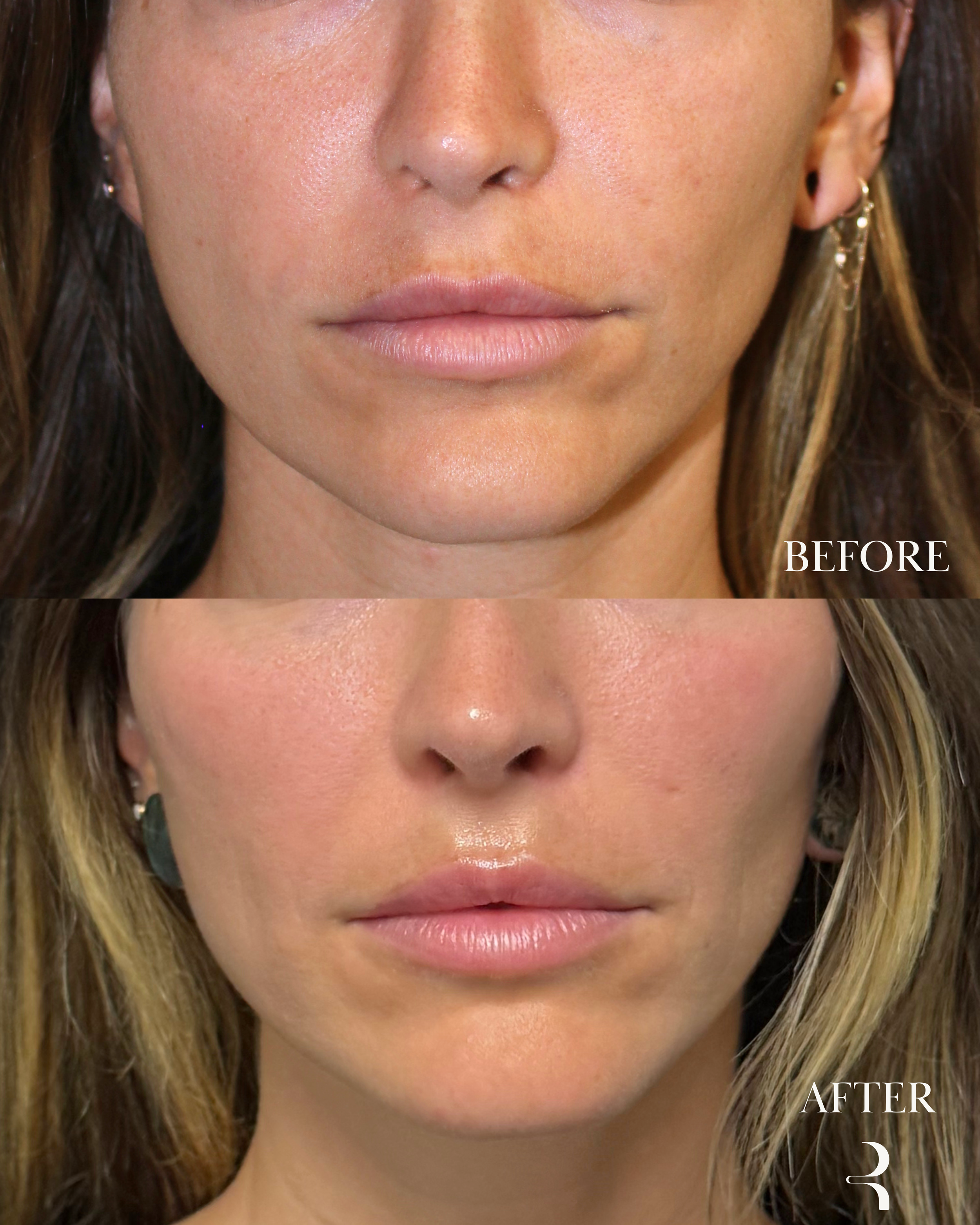
Frontal before and after view of facial fat transfer showing cheek and midface volume restoration by Dr. Elie Ramly.
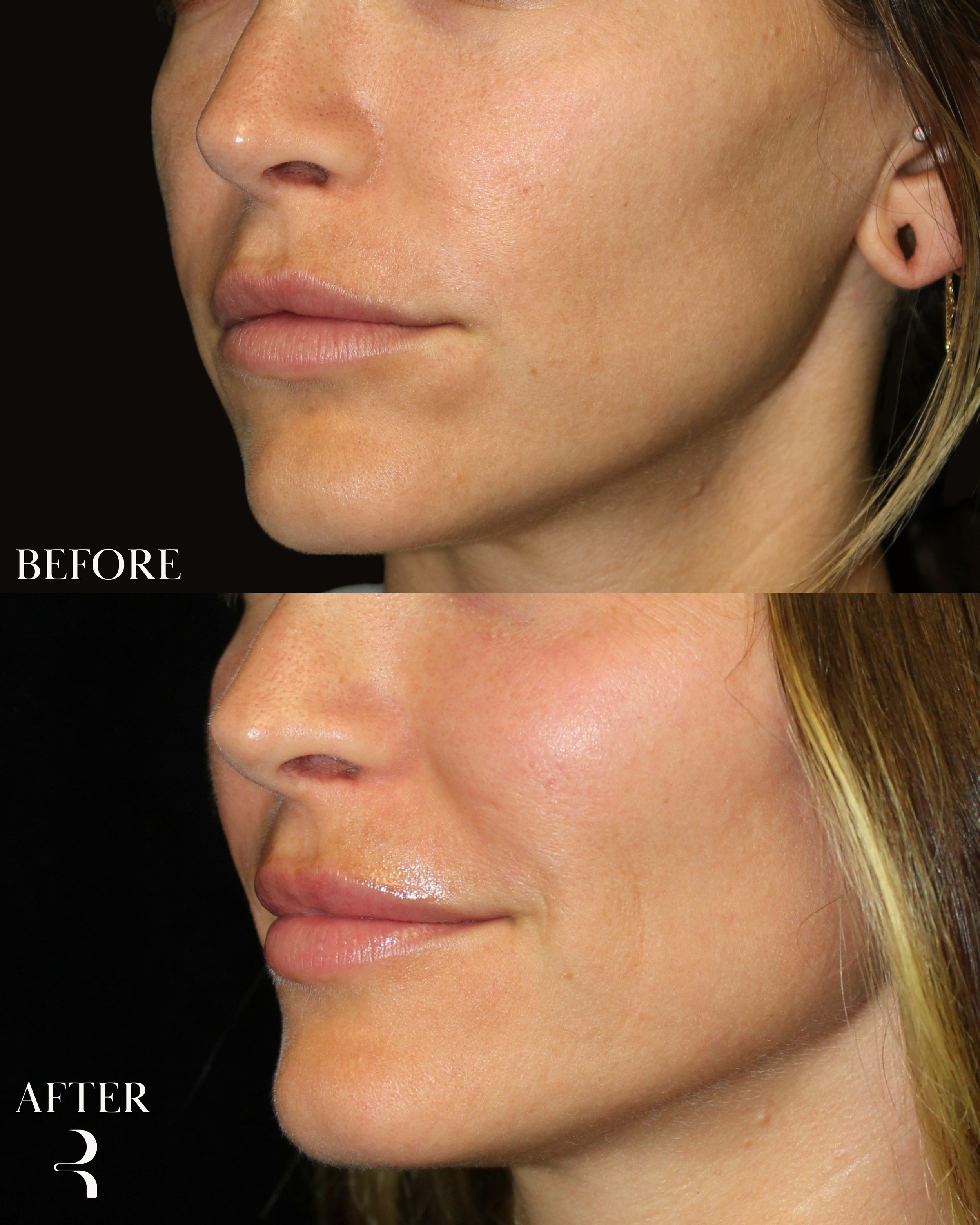
Before and After Microfat & Nanofat Facial Fat Transfer
This patient underwent facial fat grafting with Dr. Elie Ramly at Ramly Plastic Surgery in Beverly Hills, California. Fat was harvested from the abdomen, processed into microfat and nanofat preparations, and utilized for facial rejuvenation involving the cheeks, under-eyes, and temples.
By incorporating both microfat and nanofat, this approach addresses two distinct aspects of facial rejuvenation: restoration of facial volume and improvement of tissue quality.
Microfat is used to restore volume in areas affected by facial hollowing and volume deficiency, helping improve facial contours and structural support. Nanofat, a more finely processed preparation, is used for its potential regenerative and tissue-quality benefits rather than for significant volume augmentation.
The treatment was designed to address multiple anatomical regions as part of an integrated approach to facial rejuvenation, with an emphasis on natural-looking results and preservation of the patient's individual facial characteristics.
Early Facial Rejuvenation in Her 30s
In her 30s, this patient presented with early signs of facial volume loss involving the cheeks, under-eyes, and temples. Rather than waiting for more advanced facial aging and considering a facelift later, the goal was to proactively address these early changes through strategic minimally-invasive microfat and nanofat grafting. By restoring volume and addressing tissue quality at an earlier stage, the approach aims to refine facial balancing and maintain youthful facial contours and potentially defer the early need for more extensive surgical rejuvenation in the near future.
Case at a Glance
Surgeon: Elie Ramly, MD
Anesthesia: This procedure was performed with the patient awake under local anesthesia. Depending on patient preference, medical history, and overall health considerations, facial fat grafting may also be performed under twilight sedation or general anesthesia. The appropriate anesthetic approach is individualized for each patient
Practice: Ramly Plastic Surgery, Beverly Hills, California
Procedure: Comprehensive facial fat grafting using microfat and nanofat
Fat donor site: Abdomen
Treatment areas: Cheeks, under-eyes, and temples
Fat preparations: Microfat and nanofat
Primary objectives: Facial volume restoration, improved facial contours, and tissue-quality rejuvenation
Photography: Frontal and oblique views
The upper facial region is intentionally cropped in the photographs for patient privacy.
The Patient's Goals
The patient sought comprehensive personalized facial rejuvenation addressing volume deficiency across multiple anatomical regions.
Rather than focusing on a single area, the treatment considered the relationship between the cheeks, under-eyes, and temples to achieve a more balanced distribution of facial volume.
The treatment objectives included:
Restoring natural cheek and midface fullness.
Addressing under-eye hollowing and the lower eyelid-cheek transition.
Restoring volume in the temporal region.
Utilizing the patient's own fat for facial rejuvenation.
Addressing both volume restoration and tissue-quality considerations.
A Dual-Approach Technique: Microfat and Nanofat
An important distinction in advanced facial fat grafting is that not all harvested fat needs to be processed or utilized in the same way.
Depending on the treatment objective and anatomical region, fat can be prepared into different forms, each with distinct characteristics and applications.
For this patient, abdominal fat was processed into both microfat and nanofat preparations.
Microfat: Structural Facial Volume Restoration
Microfat consists of finely processed fat suitable for restoring volume in selected facial compartments.
It is used when the objective is to improve facial fullness, contour, and volume distribution.
In facial rejuvenation, microfat can be utilized in areas such as:
Cheeks: To restore midface volume, improve cheek fullness, and enhance facial contour.
Temples: To address temporal hollowing and restore upper lateral facial volume.
Under-Eyes: In appropriately selected patients, to address volume deficiency and improve the transition between the lower eyelids and cheeks.
The goal of microfat grafting is to restore volume in a manner that respects the patient's natural facial proportions rather than creating excessive fullness.
Nanofat: Tissue Quality and Regenerative Applications
Nanofat is a more extensively processed fat preparation produced through mechanical emulsification and filtration.
Unlike microfat, nanofat is not primarily intended to provide structural volume or facial projection.
Instead, it is utilized for its potential regenerative and tissue-quality applications. Its use is based on the presence of cellular components and signaling factors associated with adipose tissue, including stromal vascular fraction components.
Nanofat has been investigated for applications involving skin quality, texture, and tissue rejuvenation.
Its potential applications in facial rejuvenation differ from those of conventional fat grafting, and clinical outcomes and the degree of benefit can vary.
The distinction is important: microfat addresses volume deficiency, whereas nanofat is used for tissue-quality applications.
Why Combine Microfat and Nanofat?
Facial aging involves more than simply losing volume. Changes in facial fat compartments, skin quality, and underlying tissue characteristics can collectively influence facial appearance.
Combining microfat and nanofat allows the surgeon to consider two complementary treatment objectives:
Volume restoration: Using microfat to address hollowing and restore selected facial contours.
Tissue-quality treatment: Using nanofat for its potential regenerative applications in selected areas.
This dual approach provides an additional dimension to facial rejuvenation by considering both facial volume and tissue characteristics.
Abdominal Fat Harvesting: Using the Patient's Own Tissue
Both microfat and nanofat preparations originate from harvested adipose tissue.
For this patient, the abdomen served as the donor site.
The harvested fat was processed into the appropriate preparations for facial transfer, allowing the treatment to utilize the patient's own tissue rather than relying exclusively on synthetic injectable materials.
Understanding the Before and After Results
The accompanying frontal and oblique photographs demonstrate the visible changes in facial contour following treatment.
The frontal perspective provides an opportunity to assess cheek fullness and overall midface balance, while the oblique view provides additional information about facial projection and contour.
Although the upper face is intentionally cropped for patient privacy, the treatment also included the temples.
The photographs illustrate visible changes in facial appearance but do not independently demonstrate microscopic tissue changes or the specific contribution of nanofat.
Facial fat grafting results evolve during recovery. Some transferred fat is reabsorbed, while some survives as living tissue. Final retained volume varies between patients.
Frequently Asked Questions
What is the difference between microfat and nanofat?
Microfat and nanofat are two preparations derived from harvested adipose tissue, but they serve different purposes.
Microfat is used primarily for facial volume restoration and contour enhancement. Nanofat is more finely processed and is used primarily for its potential tissue-quality and regenerative applications rather than structural volume augmentation.
What is nanofat facial rejuvenation?
Nanofat facial rejuvenation involves using a finely emulsified and filtered fat preparation for potential tissue-quality applications.
It differs from conventional fat grafting because its primary objective is not to restore facial volume but to utilize components of adipose tissue for potential regenerative effects.
Can microfat and nanofat be used during the same procedure?
Yes. In appropriately selected patients, both preparations can be incorporated into a comprehensive facial rejuvenation procedure.
Microfat can address volume deficiency, while nanofat can be considered for selected tissue-quality applications.
Which facial areas can be treated with microfat?
Microfat can be used in selected areas including the cheeks, temples, under-eyes, and other regions affected by facial volume deficiency like the chin or jawline.
The appropriate treatment areas depend on individual anatomy and surgical objectives.
Does nanofat restore facial volume?
Nanofat is not primarily intended for structural volume restoration. Its main applications relate to potential tissue-quality and regenerative effects.
When meaningful facial volume restoration is desired, microfat or conventional fat grafting is generally more appropriate.
Where does the fat come from?
Fat can be harvested from the abdomen, flanks, or thighs, depending on the patient's anatomy and available donor tissue.
In this case, abdominal fat was used to prepare both microfat and nanofat for facial rejuvenation.
How long do facial fat grafting results last?
Some transferred fat is reabsorbed during healing, while surviving fat can provide long-lasting volume restoration. Results vary according to technique, anatomy, and individual healing characteristics.
Microfat & Nanofat Facial Fat Grafting in Beverly Hills
At Ramly Plastic Surgery in Beverly Hills, Dr. Elie Ramly approaches facial rejuvenation with an emphasis on individualized treatment planning, anatomical precision, and natural-looking results.
Facial fat grafting offers the opportunity to use a patient's own tissue to address facial volume deficiency. Incorporating both microfat and nanofat adds the consideration of tissue quality to the broader treatment strategy.
By considering the cheeks, under-eyes, and temples as interconnected anatomical regions, the objective is to restore facial balance while preserving the patient's natural facial identity.
To learn more about microfat and nanofat facial rejuvenation, contact Ramly Plastic Surgery to schedule a consultation with Dr. Elie Ramly in Beverly Hills.
Ramly Plastic Surgery | Beverly Hills, California
Facial fat grafting before and after showing cheek volume restoration and improved midface contour by Dr. Elie Ramly.